
Facial recall & verification
Two-stage matching — broad vector recall, then a verification pass with adjustable sensitivity per organisation and a mandatory review band.
SteadCalm gives police, council enforcement and investigation units one place to capture visual evidence, recall candidates from the registers they control, verify with a human in the loop, and hold a chain of custody that survives disclosure — persons of interest, stolen property, vehicles and plates on the same pipeline.
Console access requires clearance · Investigative registers enabled under written authority
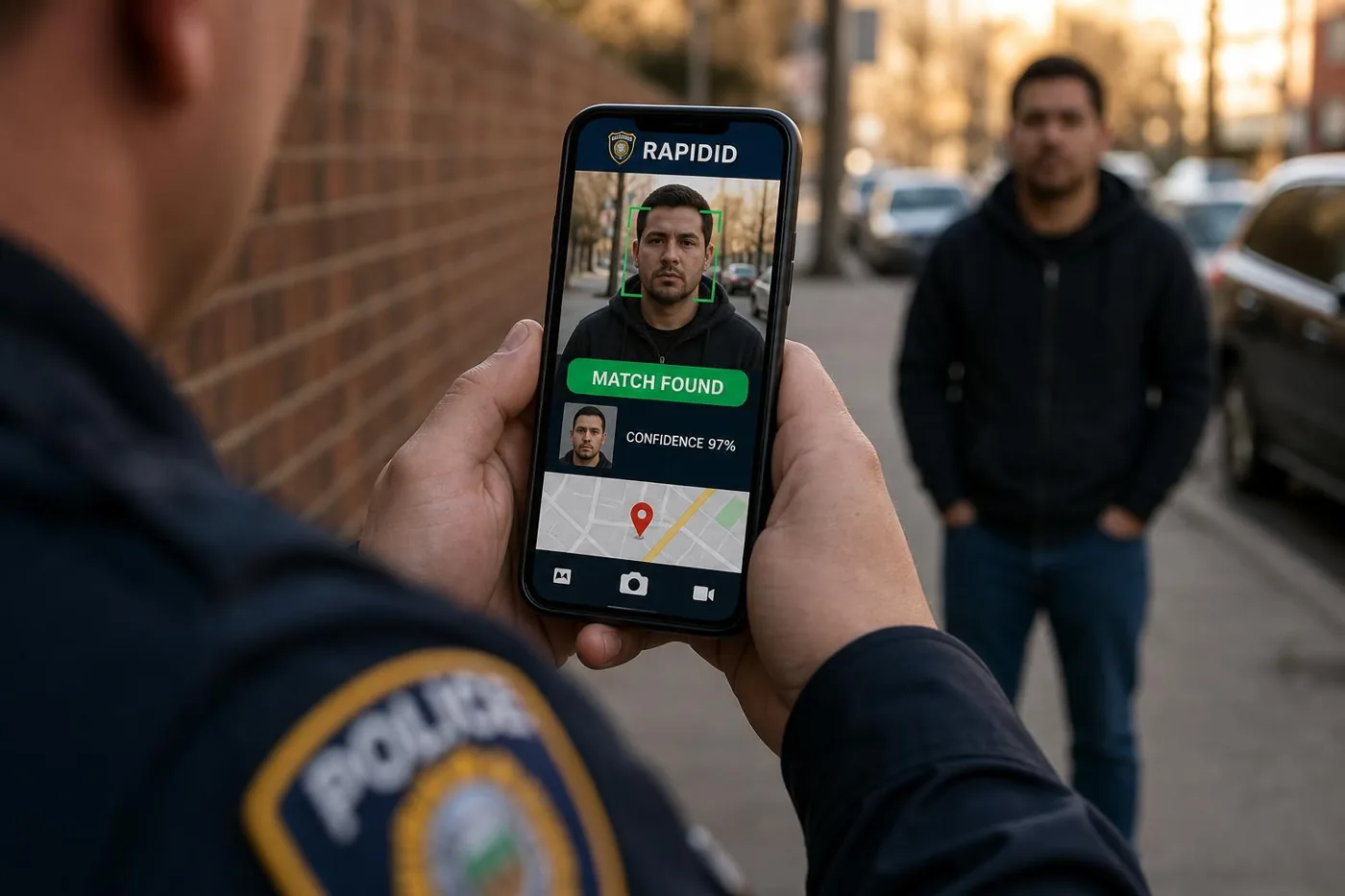 Person · Facial match
Person of interest · #PR-2026-0417
Five steps, one unbroken record. Each step writes its own custody entry, so the question "who touched this exhibit, when, and what did the system actually return?" has an answer before anyone asks it.
Photo, video, live camera or uploaded file is ingested from any device. Operator, device, GPS, timestamp and a SHA-256 content hash are written at the moment of capture — before anyone looks at it.
Vector embeddings retrieve candidate records from the active register — persons of interest, stolen property, vehicles, plates — using nearest-neighbour search scoped to the caller's clearance.
A second-pass model re-scores every candidate and returns a confidence band. Borderline results route to a human reviewer with full context. The system never auto-identifies.
Candidate list, scores, reviewer decision, notes and linked incident are written to an append-only log alongside the exhibit — nothing can be edited or deleted after the fact.
Disclosure packages export as signed bundles to named agencies, with a re-hash on export proving the exhibit is unaltered. Every transfer records recipient, purpose and time.
A person, a bike, a plate, a two-hour clip or a folder of body-worn footage — the intake is the same and so is the record it leaves behind.
Two-stage matching — broad vector recall, then a verification pass with adjustable sensitivity per organisation and a mandatory review band.
Plate OCR plus make, model and colour attributes matched against your vehicle and BOLO registers, with GPS and time on every hit.
Serials, engravings and visual similarity across property reports — a bicycle on a footpath checked in the time it takes to walk past it.
Frame sampling across a clip, multi-subject tracking with persistent subject IDs, and an event timeline you can scrub and filter.
Free-text and attribute search across every capture and detection your clearance permits — one query, whole case load.
Watch-list rules fire the moment a subject, plate or item is seen, notifying the right unit with location, confidence and the capture itself.
Registered stolen plates matched against every field plate read, OCR-normalised and scored on plate similarity, recency, proximity to the theft and corroborating vehicle detail — with the evidence behind each score.
Areas where lodged reports are recurring, with trend and confidence, plus repeat-pattern warnings routed to the responsible coordinator, dispatcher or command. It prioritises human review of reported incidents; it does not predict or profile individuals.
AI briefings grounded on a numbered fact ledger — every paragraph cites the events, reports, assets, plate reads and images it used, uncited text is flagged, and each run is retained in an audit trail.
Assembled narrative, exhibit list, match provenance and audit extract — exportable as a PDF brief ready for a supervisor or a prosecutor.
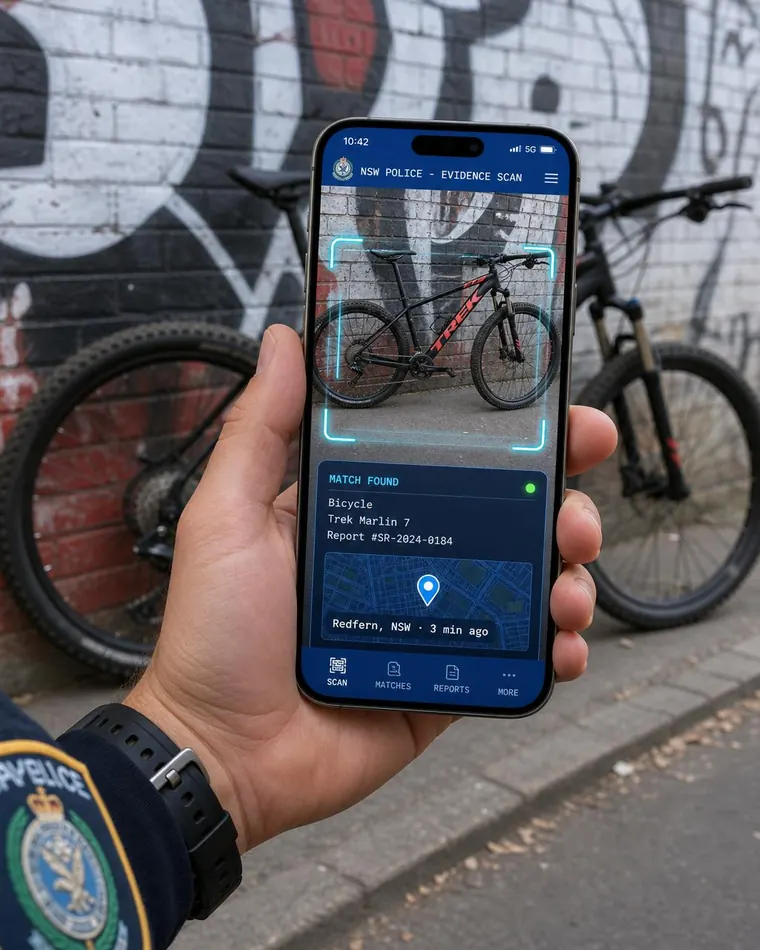 Property
Bicycle · Trek Marlin 7 · #SR-2024-0184
Property
Stolen goods
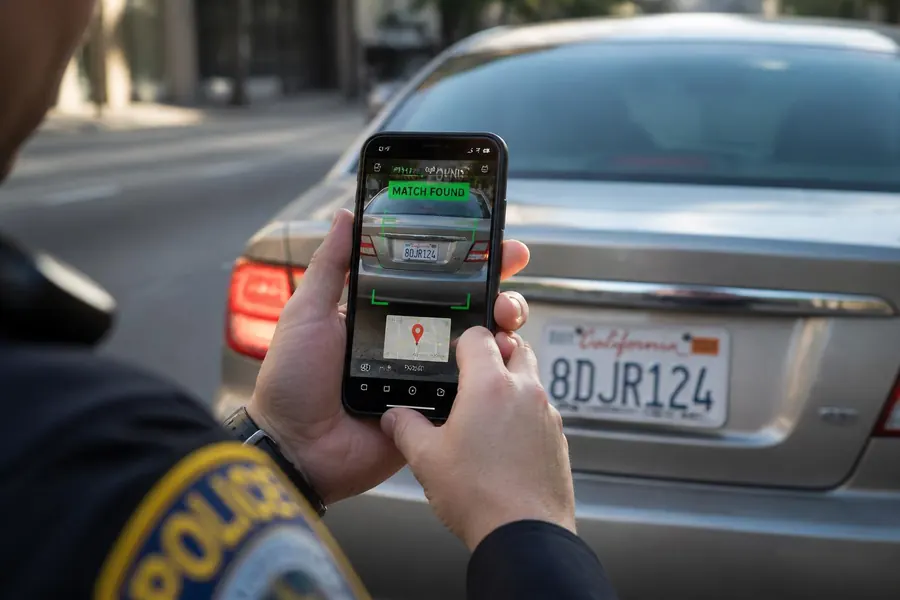 Vehicle · ANPR
Sedan · Plate 8DJR124 · #VR-2026-0092
Vehicle · ANPR
Plate & vehicle
Person · Facial matchMale · #PR-2026-0417 · Warrant flag
Person · Facial match
Person of interest
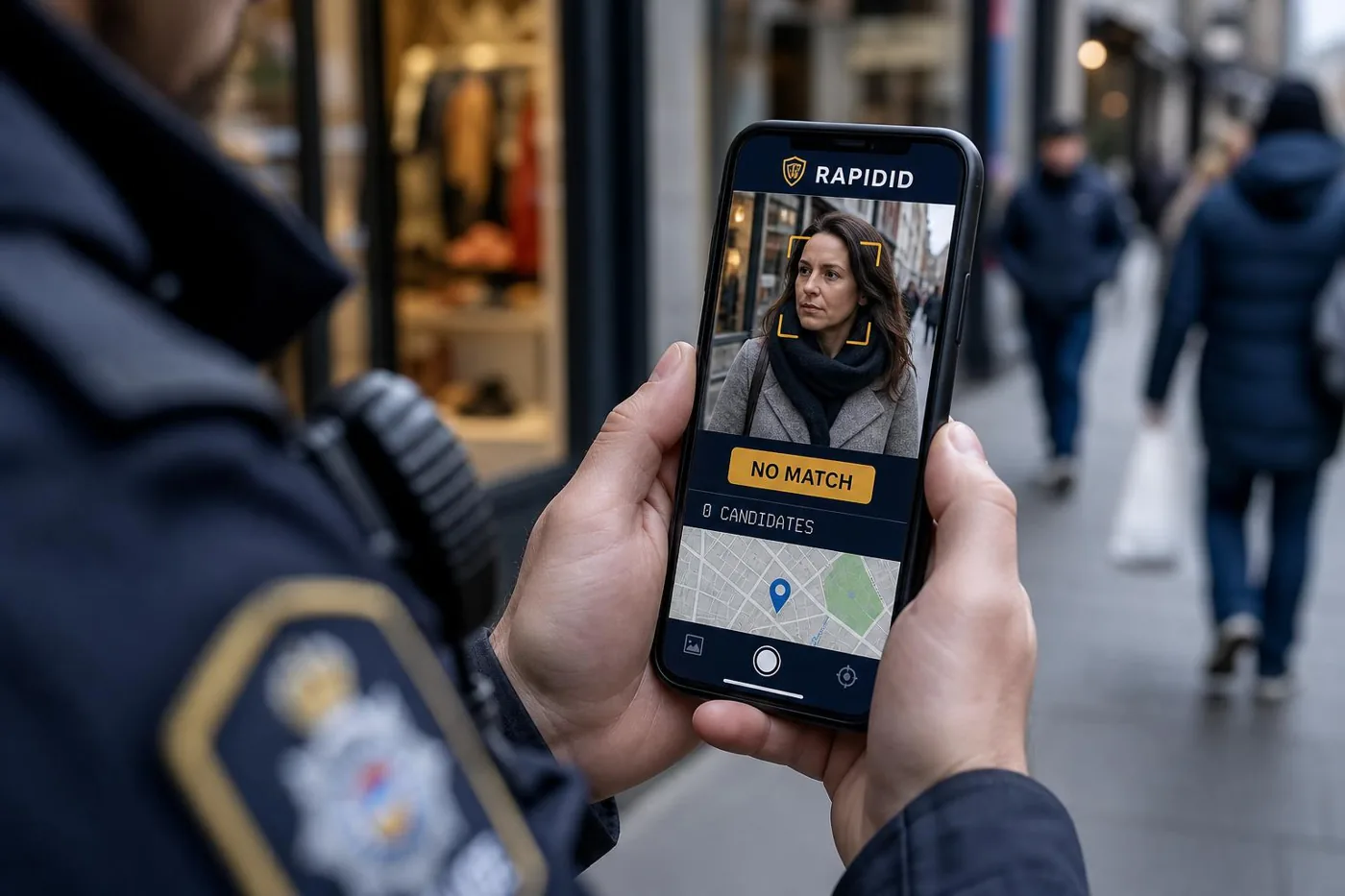 Person · Cleared
Comparison discarded · custody entry written
Person · Cleared
No match, no record
Any vendor can show you a green tick on a face. What decides a matter twelve months later is whether you can show the exhibit is unaltered, the search was authorised, the threshold was set before the search rather than after, and a named person made the call.
SteadCalm is built so that record is produced automatically as a by-product of doing the work — not assembled by an analyst the week before a hearing.
Police overview (PDF, 2 pages)Every exhibit hashed at ingest. A re-hash on export proves the file produced in court is the file that came off the device.
Every view, match run, threshold change, export and role grant is appended and cannot be edited or removed — including by administrators.
Model, version, threshold and score retained per candidate, so a defence expert can reproduce or contest the result.
The platform produces candidates, not conclusions. Every identification is attributed to a named operator at a recorded time.
The investigative registers do not exist in a venue console. They are enabled per organisation, under written authority, and each activation is audit-logged.
Security, Licensee, Coordinator, Police and Admin roles are enforced by row-level security — a police account cannot reach a venue-scoped record the ban scope doesn't release.
Registers, retention windows and residency follow your agency's policy. Nothing is forwarded to third-party or national systems unless you configure it.
Per-register retention with scheduled purge and a purge log, so deletion is as auditable as capture.
Screening at licensed venues is conducted under displayed conditions of entry. Investigative use of the identification pipeline by police or law-enforcement users requires a warrant or statutory power, is off by default, and every activation is audit-logged. This page is an overview, not legal advice — deployment requires local legal review.
Bring a unit, an LGA or a task force onto the registers you already control — with the chain of custody written from the first capture onwards.
Running venues instead? See the door-screening product