Anyone can keep a barring list. Few can defend one.
SteadCalm Venue & Field Intel is the defensibility layer around your barring register: an independent appeal path on every ban, compliance packs generated from what your venue actually did, an expiry on every record, and licence currency for every person working the door. The shared register is included — the reason to run it here is what happens when someone challenges a decision.
If you run facial recognition in a NSW hotel or club, the Code already applies to you.
The Code of Practice: Facial Recognition Technology in Hotels and Clubs (Liquor & Gaming NSW, 16 March 2026) sets 53 obligations across seven areas — privacy assessment, installation, signage, storage, access, system performance and staff response. Approved by the Minister for Gaming and Racing under Division 3, Section 48 of the Gaming Machines Act 2001. It is not guidance you get to adopt gradually: an inspector can ask for the evidence on any trading day, and a venue that cannot produce it is running the technology outside the Code.
SteadCalm is a compliance platform, not a regulator. Nothing here is legal advice or an approval by Liquor & Gaming NSW.
If an inspector walked in today, could you produce…
1.2A privacy impact assessment on the exact system installed, dated before it went live
2.1The Class 2 licence number of whoever installed it, in a change management log
3.1The L&G-issued signage, at the required size, at every area the cameras cover
4.4Proof that an expired exclusion's images were deleted as soon as practicable
5.4A record of express consent from every excluded patron being matched
6.2This week's or this month's false-match reporting, signed by your responsible person
Most venues can answer two or three of these. SteadCalm holds all 53 clauses in one console — the register, the consent record, the deletion evidence, the reports and the export a regulator asks for — so the answer is a download, not a scramble.
Why SteadCalm
The ban is the easy part. The challenge to it isn't.
Shared barring registers are no longer novel — several products already move a name between venues. What still fails is everything after the decision: the person refused entry has no clear way to contest it, the venue cannot produce the evidence pack a licensing inspector asks for, the ban has no expiry and quietly becomes permanent, and nobody can prove the guard on the door held a current licence that night.
That is the exposure a licensee actually carries, and it is what SteadCalm is built to close — one check, one record, and a defensible answer when it is tested.
Appeals
an independent, tokenised appeal path on every barring — the part regulators ask about first
Compliance
incident, signage, retention and RSA evidence packs generated from real activity, not retyped
Currency
bans, staff licences and accord memberships all carry an expiry the platform enforces
< 3 sec
from door check to a decision your duty manager can defend
0
raw licence numbers stored, and 0 records that leave your infrastructure
What's different
Three things a barring list alone will never give you.
Due process, generated compliance evidence and enforced currency. Everything else in SteadCalm exists to make these three hold up.
Difference 01
Independent appeals, built in
Most barring registers can put a person on a list. Very few can show how that person contests it. SteadCalm issues a tokenised appeal link with the barring notice — no account, no app — and routes the grounds to a reviewer who is not the person who lodged the ban.
Uphold, vary, withdraw or reject, with written reasons recorded
Reviewer independence enforced by role, not by policy alone
Every step timestamped and notified to the person barred
The appeal file exports as part of the licensing-review pack
Difference 02
Compliance packs that write themselves
Licence conditions, plans of management and accord obligations all demand evidence. SteadCalm assembles it from what the venue already did — entry decisions, incidents, signage records, retention settings, staff currency — into a dated pack you can hand to an inspector.
Entry decision register with reasons and refusal categories
Signage, policy and retention position captured as a record
Export to CSV, PDF or an AusComply-compatible incident file
Ready before the inspection, not written the night after it
Difference 03
Ban currency, so the register stays defensible
A barring list without expiry dates becomes indefensible the moment it is tested. Every SteadCalm barring carries a duration, a review point and an owner, and lapsing records are surfaced before they expire rather than quietly hardening into a permanent list.
Expiry and review dates mandatory on every barring
Lapse warnings to the licensee and accord coordinator
Automatic retirement when a ban runs its term
A dated audit of who extended what, and on what grounds
Assumed, not optional
The things a licensee assumes are already there.
None of these win a deal on their own. Missing any one of them loses it.
Entry Decision Register
Every entry, refusal and RSA decision logged at the point it is made, with reason codes, staff member and time — the record a licensing inspector or a plan-of-management review asks for first.
Export to AusComply and accord reporting
Entry decisions and incidents export in a format your accord's existing incident reporting accepts, so SteadCalm sits alongside AusComply rather than asking a venue to abandon it.
CCTV and VMS alongside the record
Camera references, retention windows and the responsible operator are recorded against each check, so footage can be located and requested against a specific decision instead of scrubbing a night of video.
One check, two registers — self-exclusion
Where a venue participates in the NSW Multi-Venue Self-Exclusion scheme, a single door check can also test the self-exclusion register through the scheme's own interface. SteadCalm holds no self-exclusion data and stores no copy of it — the scheme remains the source of truth.
NSW FRT Code of Practice, clause by clause
For hotels and clubs running facial recognition in NSW, the console tracks every obligation in the Liquor & Gaming NSW Code of Practice — the Attachment A provider declaration, the separated exclusion register, weekly and monthly FNIR/FPIR usage reporting, and the change, maintenance, complaint and breach registers — evidenced and ready to hand to the regulator on request.
Workforce currency
Prove every person on shift was licensed to be there.
An expired security licence or a lapsed RSA is the fastest way a good night becomes a licence problem. The same currency engine that keeps barrings in date is pointed at your people — and for many venues and security operators it is the first module they turn on, before they touch the register at all.
Register lookups are recorded as attested manual checks — who checked, against which register, and when — because L&GNSW and SLED publish no machine-readable lookup. The evidence trail is the checkable artefact.
RSA, RCG, security 1A, Master Licence 2A, first aid and certificates of currency, each with an expiry.
60-day expiry alerting
Lapsing credentials are flagged well before a roster is built around them.
Attested register checks
Each verification records the checker, the register and the timestamp.
Per-shift sign-on
Every sign-on stamps whether that person's credentials were current at the moment they started.
It is the cheapest liability to remove
An unlicensed guard or an expired RSA is a strict-liability exposure that sits with the licensee and the Master Licence holder, not the individual. Currency is the one control that removes it outright, and it takes a manager minutes a week rather than a policy rewrite.
It replaces the shoebox and the spreadsheet
Most venues keep photocopied cards in a folder and a spreadsheet nobody owns. Neither survives an inspection, a WHS claim or an insurer's request. One register, per person, per venue, with the expiry dates enforced instead of remembered.
It is the evidence, not the assertion
The value is not knowing a licence is current — it is being able to show, months later, that it was current at 11:40pm on the night in question, who verified it, and against which register. That is the artefact a regulator, insurer or court asks for.
Security operators sell it on
A contract security firm running currency across its whole guard roster can hand each venue it staffs a per-shift sign-on record. That turns compliance overhead into a differentiator when tendering for the next door.
It works before the register does
Currency needs no accord agreement, no shared data and no privacy negotiation — it only touches your own staff. Most venues turn it on in week one while the barring register is still being scoped.
It ties into every other record
A door check, an incident report and a refusal all carry the sign-on state of the staff involved. The compliance pack assembles itself from records that already agree with each other.
Where we stand
What we can claim, and what we can't.
A platform that sells due process has to start by being straight about its own status.
No regulatory approval
SteadCalm holds no approval, accreditation or endorsement from any liquor regulator, police force or government agency, in any jurisdiction. Venues operate screening under their own legal advice and licence conditions. We document your compliance position; we do not substitute for it.
Where we're starting
We are building with a single beachhead liquor accord starting with a NSW Coastal region, rather than claiming national coverage we do not have. Those first venues shape the entry register, the appeal workflow and the compliance pack before we widen to a second accord. Participating venues and accords are named only with their consent.
Accuracy published, not asserted
Match rates, false-match rates, review-queue volumes and performance across demographic groups are measured and published to participating venues and accords in the accuracy register, with the method stated. Anything not yet measured is shown as not measured — never estimated.
How it works
Screen. Match. Decide. Record.
Four steps at the door — and the same four steps everywhere else SteadCalm is used. One engine, one audit trail, pointed at whichever register you are entitled to check.
01
Screen
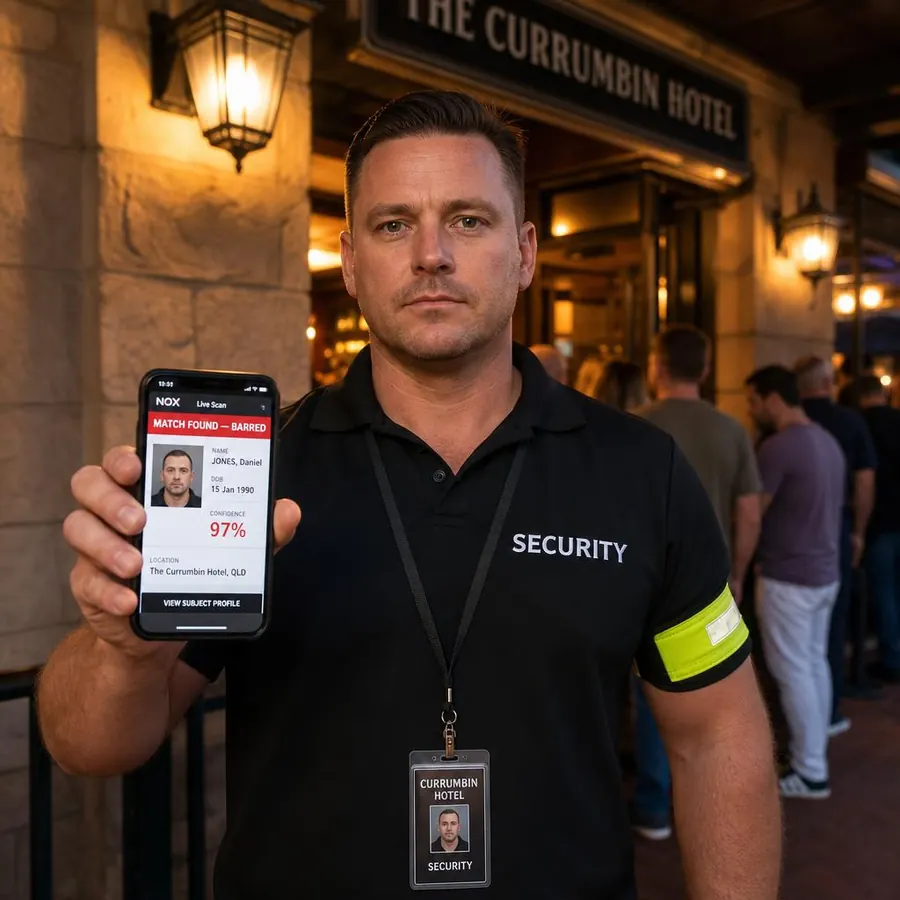
Door staff check a patron on arrival by name, photo or scanned ID — one tap on a phone or tablet.
Beyond the door: an officer points the same camera at an item, vehicle or plate.
02
Match
The check runs against the tiered register — venue → accord → LGA → state → national — in seconds.
Beyond the door: the same engine runs against stolen-property and vehicle registers.
03
Decide
A confirmed hit denies entry. A borderline hit routes to a reviewer with full context before anyone is turned away.
Beyond the door: a hit notifies dispatch with GPS, timestamp and confidence score.
04
Record
Venue, method, outcome and reviewer are written to a signed, immutable log — ready for a licensing review.
Beyond the door: the same log becomes a court-ready chain-of-custody bundle.
The network · Built for licensees, accords and door teams
One register. Shared exactly as far as the ban goes.
Those four steps only hold up if the record behind them does. Every venue gets a defensible account of who was screened, on what basis, by whom — and what happened next — while raw identity data stays out of the system entirely.
Tiered barring register
Bans propagate by scope — venue, accord group, local government area, state or national — with row-level security enforcing who sees what.
Photo door-check
Point the tablet at a patron; face embeddings match against active bans in seconds. Low-confidence hits route to a human review queue.
ID hash lookup
Driver-licence numbers are SHA-256 hashed at capture — never stored raw — and matched against the register. Zero raw PII footprint.
Accord coordination
Coordinators approve, revoke and share barrings across every linked venue. Licensees see only what their accord permits.
Manual review queue
Configurable similarity thresholds send borderline photo and ID hits to a reviewer with full context and audit trail before a match is confirmed.
Independent appeals
Barred persons receive a tokenised link to lodge grounds without an account. Reviewers can uphold, reject or withdraw with notifications at every step.
Bulk CSV onboarding
Import existing accord registers with validation, per-row error reporting and a persistent import batch history for compliance.
Audit exports
Export door-check and appeal audit trails as CSV or PDF, filtered by venue, method and date range — court-ready and dispute-ready.
Live notifications
Email and push alerts fire on ban approvals, appeal lodgements and decisions — configurable per role.
Ban currency & renewals
Every barring carries an expiry. Lapsing records are surfaced before they expire so the register stays defensible instead of drifting out of date.
Workforce currency
RSA, RCG, security 1A, Master Licence 2A, first aid and certificates of currency tracked for the door and bar team, with attested register checks and a per-shift sign-on record.
NSW FRT Code compliance
The Liquor & Gaming NSW Code of Practice for facial recognition in hotels and clubs, clause by clause: provider declaration, exclusion register, FNIR/FPIR usage reports and the change, maintenance, complaint and breach registers.
Purpose-built roles
Security
Front-of-house door staff run checks and propose new bans.
Licensee
Venue owners approve, revoke and manage their premises register.
Coordinator
Accord coordinators share intelligence across linked venues.
Police and administrators retain global oversight across every venue and accord.
Five scopes, one lodgement
1Venue — Enforced at your premises only. Nobody else sees the record.
2Accord — Shared with the licensed venues in your accord group.
3LGA — Applies across every participating premises in the local government area.
4State — Reserved for serious matters, approved at coordinator level.
5National — Highest tier — police and administrator oversight required.
Row-level security enforces the ladder in the database, so a venue never sees a record it isn't entitled to.
Available to licensees, accord coordinators, security staff, police and administrators.
Beyond the door · Off by default for venues
Same engine. Different register.
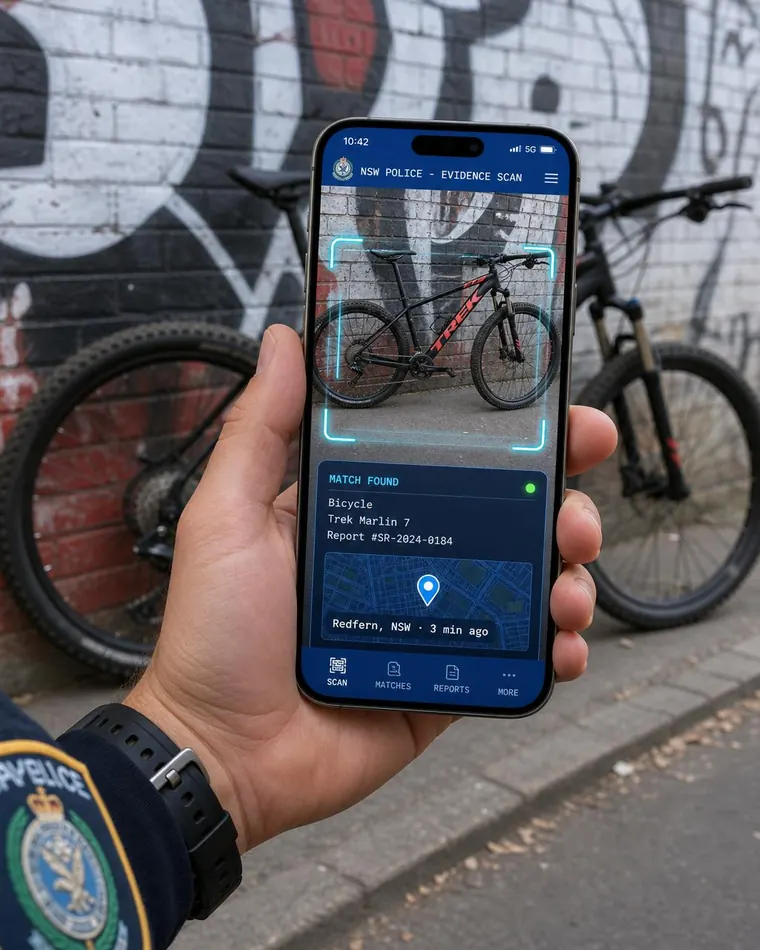
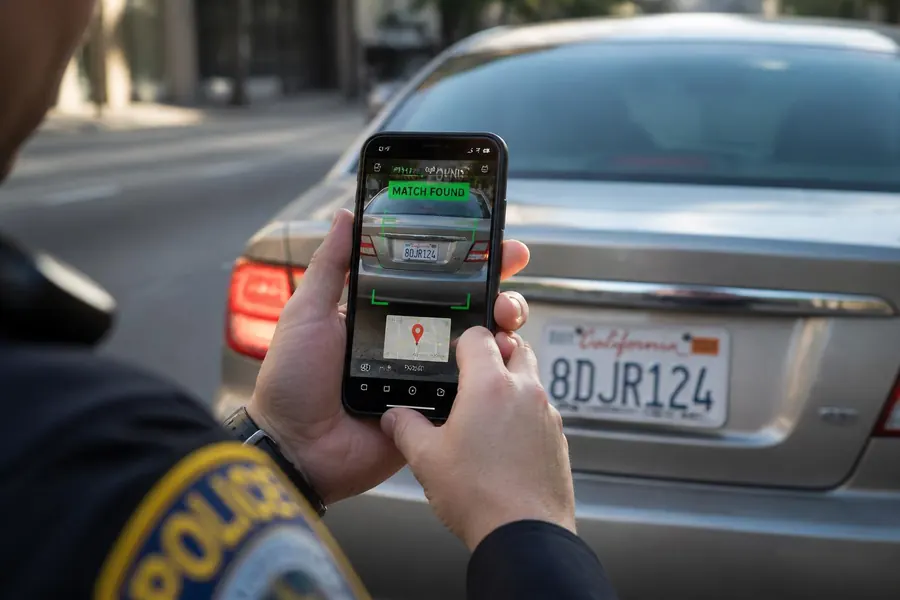
Screen, match, decide, record doesn't stop being true when the subject is a bicycle or a number plate. Point the same four steps at a stolen-property or vehicle register and you get police and enforcement capability — with the identical audit trail behind it. Most licensees never switch it on, and nothing here appears in a venue console unless they do.
Venues, accords & door teams
Screening at the entrance
Barring register, photo and hashed-ID door checks, incident logging, appeals and accord sharing. Person data stays hashed; no property or vehicle features ever appear.
Home invasions, stolen vehicles and repeat break-and-enters worked as one case thread — residents report, coordinators triage, police get a cited tactical briefing.
·Recurring-incident areas drawn from lodged reports
·Early warnings routed to the responsible role
·Stolen-plate cross-matching with confidence scoring
Stolen property, vehicle and plate recognition, video review, standing alert rules and court-ready disclosure — enabled per organisation under written authority, every activation audit-logged.
Two audiences, one platform — and the same audit trail underneath both. Neither register is visible to the other unless a ban scope or written authority explicitly releases it.
Property
Match found
Bicycle · Trek Marlin 7 · #SR-2024-0184
Redfern, NSW
Property
Stolen goods
Vehicle · ANPR
Match found
Sedan · Plate 8DJR124 · #VR-2026-0092
Downtown
Vehicle · ANPR
Plate & vehicle
Two operating contexts · One platform
Screening at a licensed venue is operated by the venue, under its own legal advice and licence conditions. SteadCalm records the entrance notices, policies and retention settings a venue puts in place so its compliance position is documented — the lawful basis for screening remains the venue's to establish. Investigative use of the identification pipeline by police or law-enforcement users requires a warrant or statutory power, is off by default, and every activation is audit-logged.
Whatever you check, the platform behaves the same way.
These four capabilities aren't a police feature set — they are how SteadCalm works at the door, in the car park and at the desk. Turn a register on and it inherits all of them.
Instant visual match
Camera-based recognition of faces, documents, items, vehicles and plates against whichever register is active.
Live coordination
Duty managers, coordinators and dispatchers see checks as they happen, on a map, with alerts pushed to the right people.
Court-ready records
Every check, match and note timestamped and packaged — for a licensing review or an evidence bundle.
Repeat-pattern early warning
Recurring incident patterns in a location are surfaced from reports already lodged and flagged to the coordinators, dispatchers and admins responsible for reviewing them. It prioritises human review; it does not direct enforcement action against individuals.
Clearance-based access
Security, Licensee, Coordinator, Police and Admin — granular, enforced in the database, and never leaving your infrastructure.
Back where it started
It all comes back to the door.
Property, vehicles and plates are extensions. The product is the check a door team runs on a Friday night, and the record it leaves behind — one check, one register, shared exactly as far as the ban goes.
The decision that has to be right is made standing up, under pressure, with a queue behind it. Everything else in SteadCalm exists to support that moment.
Who
Door staff, duty managers & licensees
The people standing at the entrance making the call — backed by accord coordinators and police with oversight across every linked premises.
When
Friday night, event trade, last drinks
Peak trade, ticketed events, RSA refusals, bottle-shop counters and the incident write-up that follows the next morning.
Where
At the entry point, on the device you have
Any modern phone or tablet with a browser. Coordinators and police work the same register from the console back at the office.
Accord coordinators, police and administrators work the same register from the console — oversight without taking the call out of the venue's hands.
Trust & control
Your data. Your rules. Your audit trail.
A shared register only works if every venue trusts the boundaries around it. Roles, retention, scope and integrations are yours to configure, and every check is signed and logged — at the door and everywhere else.
Runs against your accord's register
Your venues, your barring records, your retention rules. Agency stolen-property and missing-persons registers plug in the same way — nothing is forwarded externally.
Roles that match how a venue actually runs
Security, Licensee, Accord coordinator, Police and Admin — granted per user and enforced in the database, not just the interface.
Encrypted in transit and at rest
Licence numbers are SHA-256 hashed at capture; evidence bundles are hashed and cryptographically signed.
Full audit trail
Every check, every match, every viewer — timestamped and immutable, from the door to the appeal.
Where it works
One platform, read one piece at a time.
SteadCalm covers the door, the roster, the appeal, the compliance pack, the neighbourhood and the case file. Rather than make you read all of it, every area has its own page — pick the setting you are in, the capability you need, or the kind of organisation you are.
Where it is used
The settings SteadCalm is built for, and what the platform does in each of them.
You pay for the licensed venue that carries the liability — never per seat, and never per check. Prices are in Australian dollars and exclude GST. Cancel any time — access runs to the end of the paid period.
For a single venue
Pilot
Free
for 30 days
One venue, full door-check workflow, no card required.
Turns the door check into a continuous one. Existing entrance, gaming-floor and car-park cameras stream into the console, subjects are tracked frame to frame with a coloured box and an ID that persists across cameras, and a match against an active barring raises an alert at the door before the person reaches it. Every alert keeps the frames, the confidence score and the reviewer's decision, so a contested refusal has footage attached rather than a recollection.
Works with the cameras you already have — no new hardware
Multi-subject tracking with persistent IDs across the venue
Low-confidence hits go to a reviewer, never straight to a refusal
Alerts routed by role, with frames retained against your policy
Workforce currency
A$79 per venue / month
The module most venues and security operators switch on first. RSA, RCG, security 1A, Master Licence 2A, first aid and certificates of currency are held per person with expiry dates, flagged 60 days out, verified as attested register checks, and stamped at every shift sign-on — so the roster itself becomes the evidence that everyone working was licensed to be there.
Six credential types tracked per person, per venue
60-day lapse alerting before the roster is built
Attested register checks: who checked, which register, when
Per-shift sign-on record an inspector can read back
Groups, councils and agencies
These deployments are scoped and quoted so they can pass procurement. Send us the details and you will get a written price, a security pack and a draft agreement addressed to the right approver.
Group operator
Multi-site hospitality groups with central oversight across every venue.
Banded by number of sites
Group-wide register and reporting
Single agreement and one invoice
Onboarding and staff training
Council / community safety
Community Shield for a local government area — property and vehicle matching, hot-spot analysis and early warnings.
Licensed to the council, not to venues
Property, vehicle and camera registers
Recurring-incident review and patrol prioritisation
Community reporting intake
Security operator
Contract security and crowd-control operators staffing multiple licensed venues, with workforce currency at the centre.
Licence currency across your whole guard roster
Per-shift sign-on evidence for every venue you staff
Shared entry-decision records with the venues you serve
Priced on headcount and venues covered
Police / agency
Police and government agency deployments with governance, retention and evidentiary controls.
Agency-grade retention and audit controls
Evidence packets and chain of custody
Security assessment and procurement support
Dedicated implementation team
FAQ
Common questions.
Get started
One check at the door. One record everywhere it matters.
Bring your venue or accord onto the shared register — your venues, your roles, your retention rules, from the first door check onwards.